Molten Metal Splash Protection:
EN ISO 11612 Explained
Temperatures exceeding 1,500°C. Exposure of a fraction of a second. The wrong garment — or one unprotected layer — can cause life-altering burns. Here’s what the standard requires and why garment selection decisions matter.
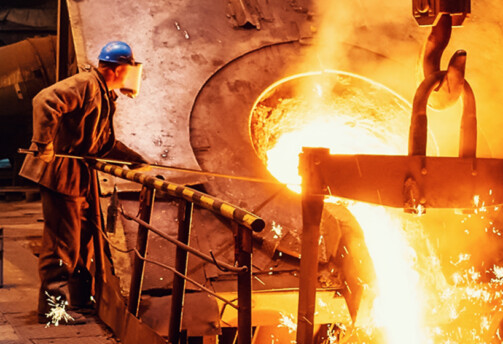
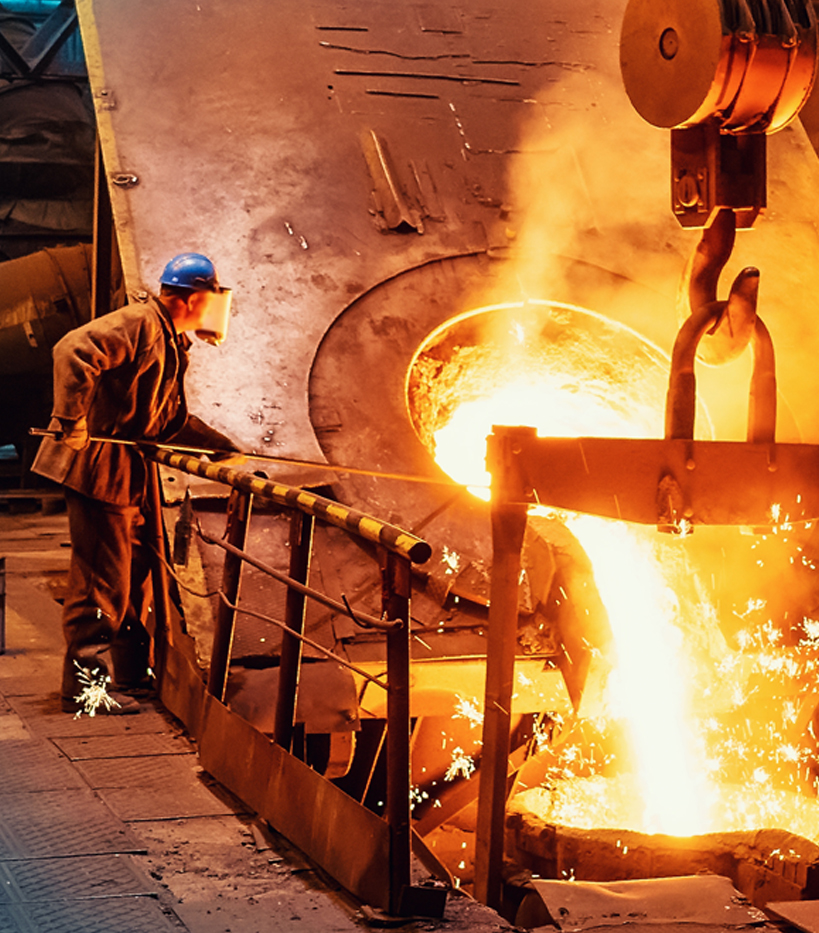
In foundries, steelworks, welding environments, and metal casting facilities, workers face one of the most severe thermal hazards in industry — molten metal splash. Unlike arc flash, which is an electrical event, molten metal splash involves the direct projection of superheated liquid metal onto the body.
Protective garments for these environments must be selected with precision. The wrong fabric, an unsealed seam, or a single non-compliant layer beneath the outer garment can cause catastrophic injury.
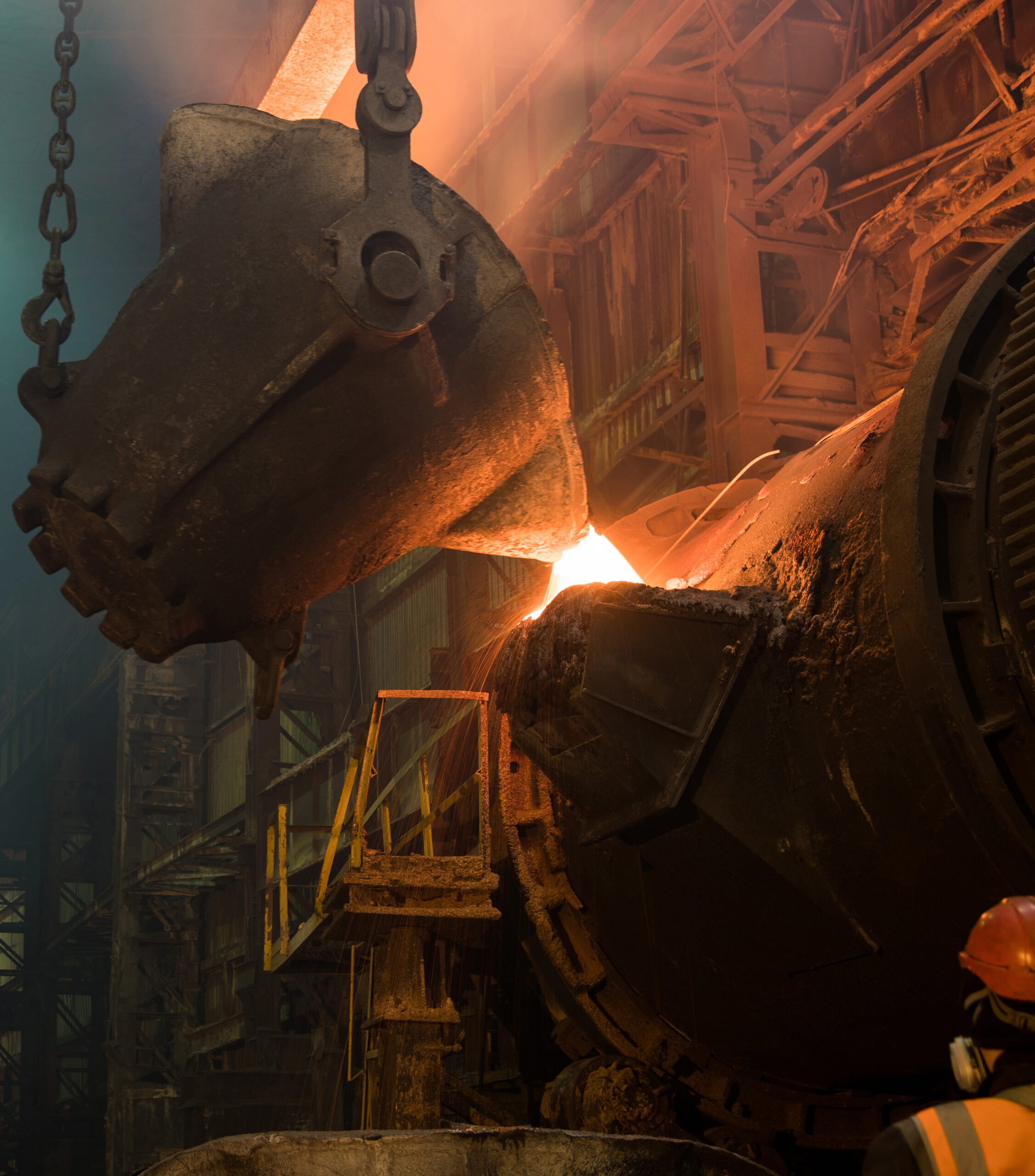
Molten metal splash occurs when liquid metal — steel, aluminium, copper, iron, or their alloys — is projected onto the wearer during pouring, casting, welding, or cutting operations. The hazard presents in two distinct forms, each with different garment performance requirements.
Significant volumes of molten metal contacting the garment — typically from pouring, casting, or major spills. Highest risk of burn penetration through fabric.
Small droplets of molten metal common in welding, grinding, and cutting. Lower individual volume but high frequency — garments must resist repeated exposure.
Proximity to molten metal sources also exposes workers to sustained radiant and convective heat — requiring garments to perform across multiple thermal hazard types simultaneously.
Exposure of even a fraction of a second to molten metal splash at these temperatures can cause deep, full-thickness burns requiring surgical intervention. Garment selection is not a procurement decision — it is a clinical one.
EN ISO 11612 is the primary European standard for protective clothing against heat and flame in molten metal environments. It replaced the older EN 531 standard and provides a comprehensive performance framework structured around six performance code categories.
A garment certified to EN ISO 11612 will display a combination of these codes on its label — for example, A1 B1 C2 D1 E3 F1 — with each letter identifying the hazard type and each numeral indicating the performance level achieved.
| Code | Hazard Type | Levels | Relevance |
|---|---|---|---|
| A1/A2 | Limited flame spread | A1 (surface), A2 (edge) | Mandatory — all certified garments must achieve A1 or A2 |
| B | Convective heat | B1–B3 | Sustained heat exposure from proximity to molten metal sources |
| C | Radiant heat | C1–C4 | Radiant heat from furnaces, molten baths, and casting operations |
| D | Molten aluminium splash | D1–D3 | Direct splash resistance — aluminium casting and processing environments |
| E | Molten iron/steel splash | E1–E3 | Direct splash resistance — steelmaking, foundries, and heavy fabrication |
| F | Contact heat | F1–F3 | Accidental contact with hot surfaces, tools, and equipment |
Important: Not all EN ISO 11612 garments carry all six codes. A garment may be certified to A1 B1 D1 only — meaning it has not been tested for radiant heat or iron splash. Always match the specific codes on the label to the hazards present in your working environment.
Need EN ISO 11612 certified garments matched to your specific foundry or steelwork environment?
Garments for molten metal environments must do two things when exposed to splash: they must not ignite, and the molten metal must shed from the surface rather than penetrating to the skin. Fabric selection determines whether both of these things happen reliably — across the full service life of the garment.
“Inherent FR fabrics are strongly preferred in molten metal applications — performance is built into the fibre structure and cannot wash out, degrade, or be removed.”
Treated FR fabrics can meet EN ISO 11612, but require more rigorous garment management — including monitoring wash cycles, reproofing where specified, and retiring garments when treatment performance can no longer be guaranteed. In high-consequence molten metal environments, inherent FR removes this variable entirely.
Beyond fabric selection, garment construction is a critical and frequently overlooked factor in molten metal PPE. Each design element either reinforces or undermines the protection the certified fabric provides.
As with arc flash, a full-layer approach is essential. The outer EN ISO 11612 garment does not operate in isolation — what is worn beneath it directly affects injury outcomes when heat penetrates.
Never wear synthetic base layers in molten metal environments. Polyester, nylon, and spandex melt at temperatures between 120–260°C — far below the thermal conditions involved. A melting base layer adheres directly to skin, significantly increasing burn depth and complicating medical treatment. Base layers must be inherent FR or non-melting natural fibres only.
VAILOS develops inherent FR fabrics and finished garments specifically engineered for high-thermal-hazard environments including molten metal splash. As a vertically integrated manufacturer, VAILOS controls both fabric development and garment production — ensuring that performance codes, seam construction, fastenings, and layering compatibility are all addressed within a single certified system.
By removing the need for customers to coordinate across multiple suppliers and certifications, VAILOS delivers garments that are simpler to specify, easier to manage, and more reliable across their full service life.
Common questions from safety managers and procurement teams specifying molten metal protective garments.
What is the difference between EN ISO 11612 and EN ISO 9150?
EN ISO 9150 tests fabric resistance to small molten metal splashes only. EN ISO 11612 is the full garment standard — it covers molten metal splash (codes D and E) plus flame spread, convective heat, radiant heat, and contact heat in a single certification framework.
What do the D and E codes mean on a garment label?
Code D = molten aluminium splash resistance. Code E = molten iron/steel splash resistance. The number (1–3) is the performance level — 3 is highest. E3 is required for demanding steelmaking and foundry environments.
Can I use a standard FR garment in a molten metal environment?
Not reliably. FR garments protect against ignition but are not tested for molten metal shedding. You need EN ISO 11612 certification with the specific D and E codes that match your hazard environment.
Do inherent FR fabrics outperform treated FR for molten metal?
Generally yes — inherent FR performance does not wash out, making it more consistent across the garment’s full service life. Treated FR can meet the standard but requires stricter garment management to maintain performance.
How do I read the performance codes on an EN ISO 11612 label?
Each letter is a hazard type, each number is the performance level — e.g. A1 B1 C2 D1 E3 F1. Match the letters and levels to your site risk assessment. If a code is absent from the label, the garment has not been tested for that hazard.
What happens if I wear a synthetic base layer under an EN ISO 11612 garment?
Synthetics melt at 120–260°C. If heat penetrates the outer garment, the melting base layer adheres to skin — dramatically increasing burn depth and severity. Base layers must be inherent FR or non-melting natural fibres only.
Ready to specify the right molten metal garment system?
Our PPE specialists will assess your thermal hazard environment and match the right EN ISO 11612 performance codes to your site risk assessment — from inherent FR base layers to certified outer shells.