
EN 343 is now
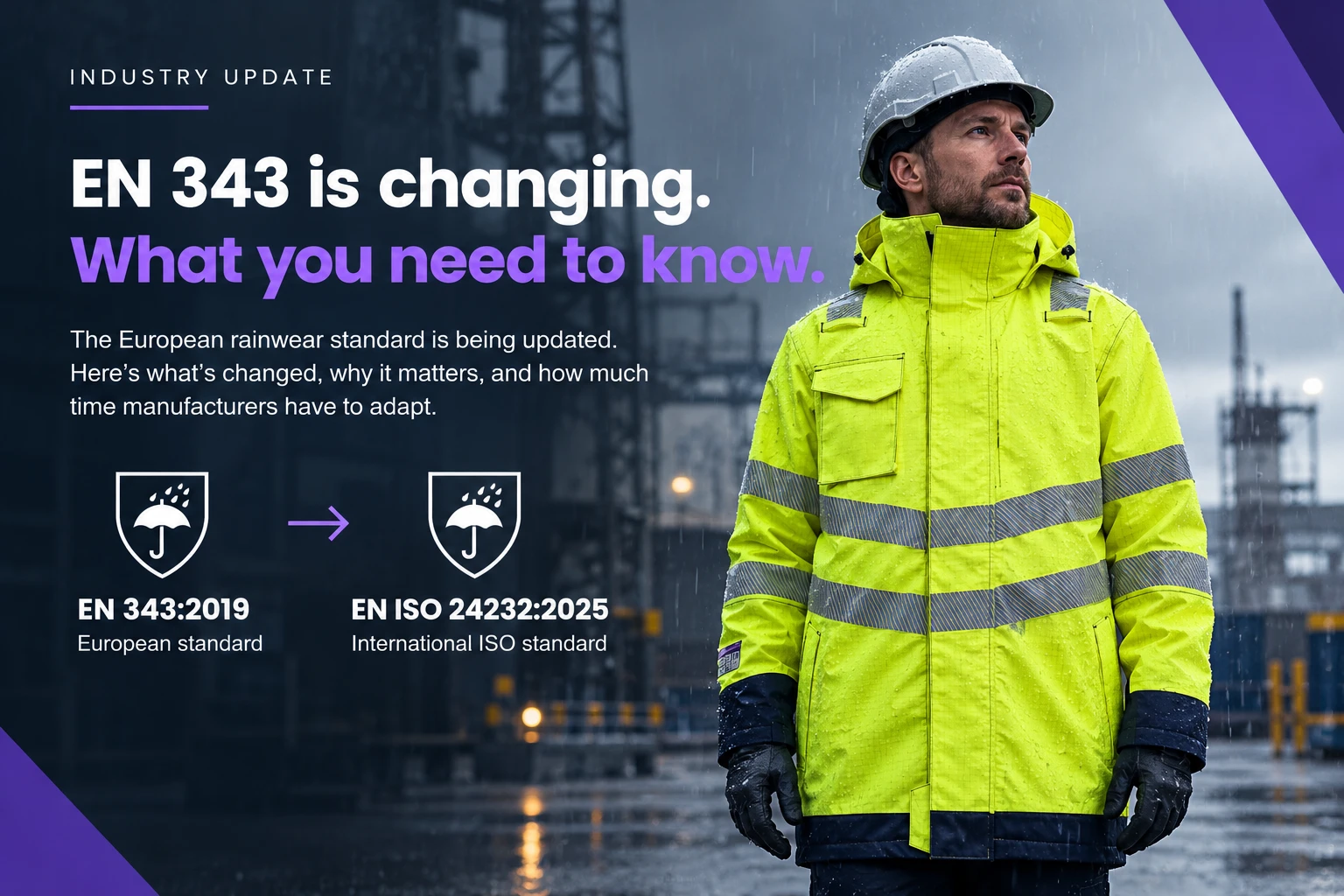
EN ISO 24232:2025
A plain guide for EHS, safety and procurement teams.
If you specify, buy or issue rainwear for a workforce, you’ve probably started seeing a new code on datasheets and labels. EN 343, the standard most of us have used for protective clothing against rain, has been replaced by EN ISO 24232:2025.
This piece walks through what the new standard is, what has and hasn’t changed, when it applies, and what you need to do about it. Short version: nothing you own today becomes non-compliant overnight, but your spec wording should change.
ISO published ISO 24232 in 2024. CEN adopted it in Europe as EN ISO 24232:2025, and it supersedes EN 343:2019. In the UK it is published by BSI as BS EN ISO 24232:2025.
The main reason for the change is reach. EN 343 was a European standard. ISO 24232 is international, so the same rainwear test and the same classes are now recognised across far more markets. For companies with sites or suppliers in several countries, that means one standard to write into a spec instead of several.
The standard sets requirements and test methods for materials and finished garments that protect against: rain and snow, fog, ground humidity.
It does not cover water splashes or waves, high-pressure water jets, or the protective properties of footwear, gloves and separate headwear. Those sit under other standards.
If you already know how to read an EN 343 label, you can read an EN ISO 24232 label.
Garments certified to EN 343 stay valid for the life of their certificate. Their labels, batch numbers and Declarations of Conformity don’t need to change. When a manufacturer renews or re-issues a certificate, it moves to EN ISO 24232. So for the next few years you will see both codes in circulation, and both are legitimate.
If you’re writing specs or tenders: update the wording to EN ISO 24232:2025, and accept EN 343:2019 for products with a certificate that is still in date. State the Wp and Ret classes you need, not just the standard number.
If you’re buying: ask your supplier when their certificates move to EN ISO 24232. A garment doesn’t need replacing because its label says EN 343.
Look for the R. Fabric and seam tests tell you the material is waterproof. An R tells you the finished garment kept water out in a rain tower, including zips, closures and seams in their real positions.
Match Ret to the work. For physical work over a long shift, breathability matters as much as waterproofness. A garment workers find too hot gets unzipped or taken off.
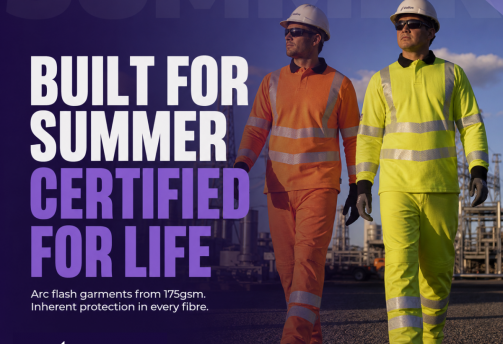
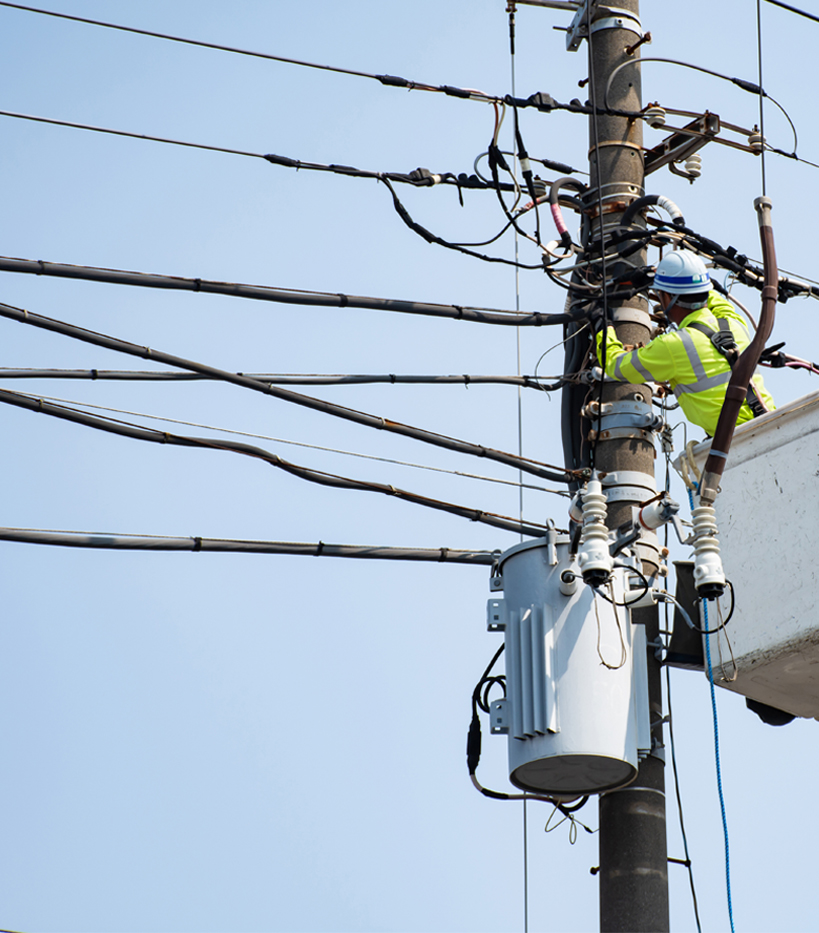
If your workforce is exposed to live electrical risk: a rain jacket certified to EN ISO 24232 only tells you it keeps water out. It says nothing about arc flash protection. A standard waterproof shell worn over arc flash garments can ignite or melt in an arc event. For operatives working near live equipment, rainwear needs to be certified for both rain and arc flash, with its own ATPV or ELIM rating.
Waterproof performance depends on how a garment is looked after.
Looking for waterproof outerwear in the Vailos range? See the DORSTEN waterproof lightweight trouser and the DETMOLD waterproof lightweight long jacket, or browse the full arc flash range.
Talk to our team about rain and arc flash rated outerwear
Has EN 343 been replaced?
Yes. EN ISO 24232:2025 supersedes EN 343:2019. In the UK it is published by BSI as BS EN ISO 24232:2025.
Is my EN 343 rainwear still valid?
Yes. Garments certified to EN 343 stay valid for the life of their certificate. Labels, batch numbers and Declarations of Conformity don’t need to change.
Do the Wp and Ret classes change?
No. Water penetration resistance (Wp) and water vapour resistance (Ret) are still graded Class 1 to 4, and the umbrella pictogram is the same.
Does EN ISO 24232 cover arc flash protection?
No. It only tells you the garment keeps water out. Operatives working near live equipment need rainwear certified for both rain and arc flash, with its own ATPV or ELIM rating.
Rain and arc flash
protection, certified.
Need waterproof outerwear for live electrical environments? Talk to our team.